

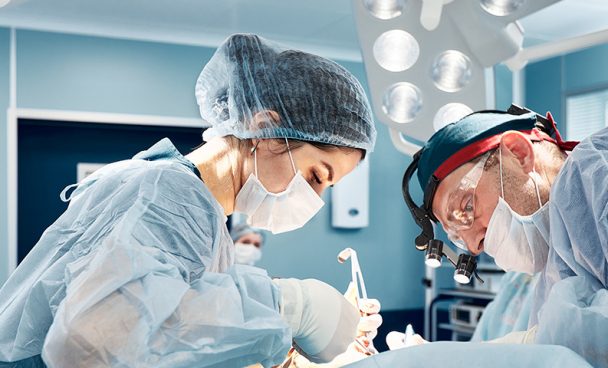
Surgical oncology is the recommended treatment for removing tumors and the surrounding area. Together with chemotherapy and radiotherapy, it forms the triad of the most commonly used procedures against cancer. Learn more.
Surgical oncology is a procedure indicated for the removal of the tumor and what we call a safety margin, which is an area without disease around it. This prevents cancer cells from remaining in the patient.
It is the safest type of treatment available for cancer and, together with chemotherapy and radiotherapy, forms the triad of the most commonly used procedures against the disease. It is worth noting that a multidisciplinary approach, combining various therapeutic modalities, often yields better results.
In its early stages, cancer can be controlled or even cured through surgery. The surgical procedure will always be performed under anesthesia, in a hospital setting, with material and a team duly prepared for the intervention.
The main factors that should be considered for the decision for oncological surgery in cancer management are:
- Prospect of cure;
- Type of cancer diagnosed;
- Seeking complete or partial removal of the tumor;
- Diagnostic assistance in locating the tumor;
- Verification of cancer spread (metastasis) or if it is affecting the function of other organs; and
- Relief of the adverse effects of the disease.
Types of oncological surgery
Types of oncological surgery depend on the factors mentioned above, the oncologist and the multidisciplinary team will choose the most appropriate type of surgery for each case. They are:
- Primary or curative (tumor removal) – in some types of cancer, the only treatment is the complete removal of the tumor through surgery. This procedure may also be performed in conjunction with other approaches, such as chemotherapy and radiation therapy;
- Diagnostic – in most types of cancer, biopsy is the primary way to reach an accurate diagnosis. During the procedure, the surgeon makes an incision in the skin and removes part of the suspicious tissue or the entire tumor. This sample is then sent to the pathologist, who will assess if there are cancer cells, the type, and the origin of them;
- Staging – staging surgery is used to identify the size of the tumor and whether the cancer has spread to other organs or parts of the body;
- Debulking (cytoreductive surgery) – in some cases, it is not possible to completely remove the tumor because it is invasive. This means that the cancer has invaded other cellular layers of the organ and can spread to other parts of the body (metastasis). In these cases, surgery is performed to remove as much of the tumor as possible, and the treatment is complemented with chemotherapy and/or radiation therapy before (neoadjuvant) or after the operation (adjuvant). Complementary treatments aim to reduce the size of the tumor as much as possible;
- Palliative – it is adopted as a way to relieve the adverse effects caused by the tumor, such as pain, pressure it may be exerting on an organ, intestinal blockage, and bleeding, among others. This approach usually improves the quality of life of individuals with advanced cancer or metastases;
- Reconstructive – after the main surgery to remove the tumor, a new procedure may be indicated to improve the organ’s functional improvement. In some cases, reconstructive surgery may be performed immediately after tumor removal, during the same procedure. An example is breast reconstruction after mastectomy (breast removal);
- Preventive – surgery can also be an alternative to reduce the risk of developing cancer. An example includes the removal of precancerous polyps in the colon as a way to prevent colon cancer. Or, in women with mutations in the BRCA1 and BRCA2 genes, the doctor may suggest the removal of the breasts (mastectomy) or ovaries (oophorectomy) as a way to reduce the risks of developing these types of cancer.
Minimally invasive surgical procedures
In addition to traditional open surgery (where larger incisions are made in the skin), there are minimally invasive procedures. Besides having smaller incisions, this type of approach offers a quicker recovery with fewer adverse effects, such as pain, for the patient.
The main types of minimally invasive oncological surgeries are:
- Laparoscopy – small incisions are made in the skin, including in the navel, through which a thin tube carrying a camera at one end is inserted. The images can be seen clearly on a video monitor. Surgical instruments are inserted through the other small incisions and manipulated externally by the surgeon. This surgery can be performed for diagnostic or curative purposes and is increasingly used in oncological treatments;
- Laser – a narrow beam of high-intensity light is used to destroy cancer cells;
- Cryosurgery – involves using chemical agents, such as liquid nitrogen at a temperature of -195.8°C, to freeze and kill cancer cells. Also known as cryotherapy, it is a therapeutic process based on treating lesions with cold. An example of its use is in early-stage low-risk prostate cancer in men for whom surgery or radiation therapy is contraindicated. Another example is to eliminate basal cell carcinoma (a type of skin cancer);
- Mohs micrographic surgery – considered the most precise and effective technique for treating the most common types of skin cancer. It allows for the identification and removal of the entire tumor while preserving the healthy skin around the lesion. The procedure involves removing the cancer from the skin layer by layer and examining each layer under a microscope in real time until a disease-free margin is obtained, i.e., until the tumor is completely removed. Finally, the wound resulting from the tumor removal is reconstructed;
- Endoscopic – a video camera and a light source attached to a cannula (thin, flexible tube) are inserted into the body through the mouth, rectum, or vagina to examine internal organs, which are displayed on a high-resolution video monitor. During this procedure, the doctor may remove samples of suspicious tissue, using instruments also inserted through the cannula, to be later evaluated by a pathologist;
- Robotic – began in 1999 with the assistance of a robot called Da Vinci®. It consists of mechanical arms, a 3D magnified image screen, and a console. This approach allows doctors to perform complex procedures with more precision, flexibility, and control than in conventional surgeries.
It is done through small incisions in the skin, through which surgical instruments and a camera are inserted. The surgeon operates them using a control similar to a video game joystick, guided by the high-resolution real-time image on the screen.
Some benefits of robotic surgery include shorter hospital stays, faster patient recovery, less bleeding during the procedure, reduced risk of infections, and minimal scarring. The main types of cancer that can benefit from it are bladder, colorectal, gynecological, kidney, lung, prostate, oropharyngeal, thyroid, and digestive tract cancers.
Treatments for Cancer
Explore our series of content related to cancer treatments.


